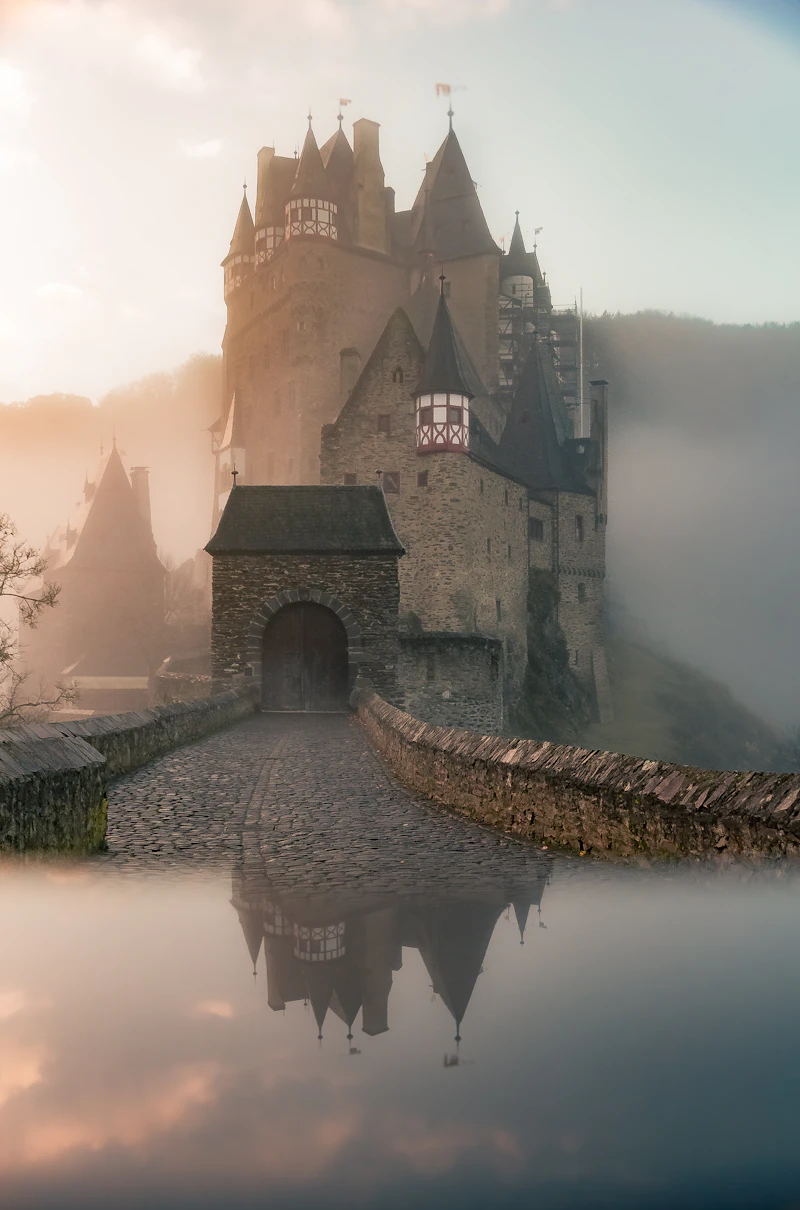
A World That Lives and Breathes
Dragon's Dogma 2 is the most stubbornly unique RPG of the generation. In an era where open-world games often feel designed by committee — checkbox-filled maps with waypoints guiding you from objective to objective — director Hideaki Itsuno has created something that feels genuinely untamed. This is a game that respects your intelligence, your time, and your sense of adventure in equal measure.
The world of Dragon's Dogma 2 is built to be discovered, not consumed. There's no fast travel system in the traditional sense — instead, you use limited-use Ferrystones to teleport to Portcrystals you've placed in the world, or you walk. And walking is where the magic happens. Every journey between towns is a potential adventure: griffins might swoop down from mountainsides, bandits might ambush you at a bridge, or you might stumble upon a hidden cave system that leads to an entirely new area of the map you didn't know existed.
This design philosophy will not be for everyone. Players accustomed to modern open-world conveniences may find the limited fast travel, the lack of a comprehensive quest log, and the absence of map markers frustrating. But for those willing to embrace its vision, Dragon's Dogma 2 offers a sense of genuine exploration and discovery that few modern RPGs can match.
Pawns and Combat
The Pawn system returns as the game's most distinctive feature and its greatest triumph. Your main Pawn — a fully customizable AI companion — learns and grows alongside you, adapting their behavior based on your play style and accumulating knowledge about quests, enemies, and environments. Hiring other players' Pawns creates a fascinating asynchronous social system where you benefit from others' experience without direct multiplayer.
Combat is visceral, physical, and consistently thrilling. Climbing onto a cyclops to stab its eye, being grabbed by a griffin and fighting to free yourself mid-flight, or coordinating with your Pawns to topple a golem by destroying its magical seals — these are the moments that define Dragon's Dogma 2's combat identity. The vocation (class) system offers excellent variety, with each of the ten vocations playing distinctly differently and the advanced vocations providing creative combinations.
Technical Growing Pains
Unfortunately, Dragon's Dogma 2's ambition is somewhat undermined by technical issues. CPU-bound performance problems plague the game, particularly in the main city of Vernworth, where frame rates can drop into the teens on all platforms. While patches have improved stability, the game still struggles when too many NPCs are on screen simultaneously.
The game's systems sometimes work against the player in frustrating ways. The single save file combined with autosave means that poor decisions can have permanent consequences with no way to undo them. Some quests can be permanently failed by sleeping for too long or traveling too far. These design choices are intentional — part of the game's commitment to consequence-based gameplay — but they can feel punishing rather than meaningful in practice.
✅ Pros
- Unmatched sense of genuine exploration
- Pawn system is brilliantly innovative
- Visceral, physical combat
- Excellent vocation variety
- Emergent gameplay creates unique stories
- Stunning world design and art direction
❌ Cons
- Severe CPU-bound performance issues
- Limited fast travel is divisive
- Single save file can feel punishing
- Some quests are easily failed permanently
- Learning curve is steep for newcomers
The Verdict
Dragon's Dogma 2 is a flawed masterpiece — a game whose ambition frequently outpaces its execution but whose unique qualities make it an essential experience for RPG fans seeking something genuinely different.
"In a world of focus-tested open worlds, Dragon's Dogma 2 dares to be wild, untamed, and unapologetically itself."